Heat Stress: an underestimated issue for dairy cows!
arrow_backTil oversigten17. november 2026 | Abbi-Aerotech B.V.
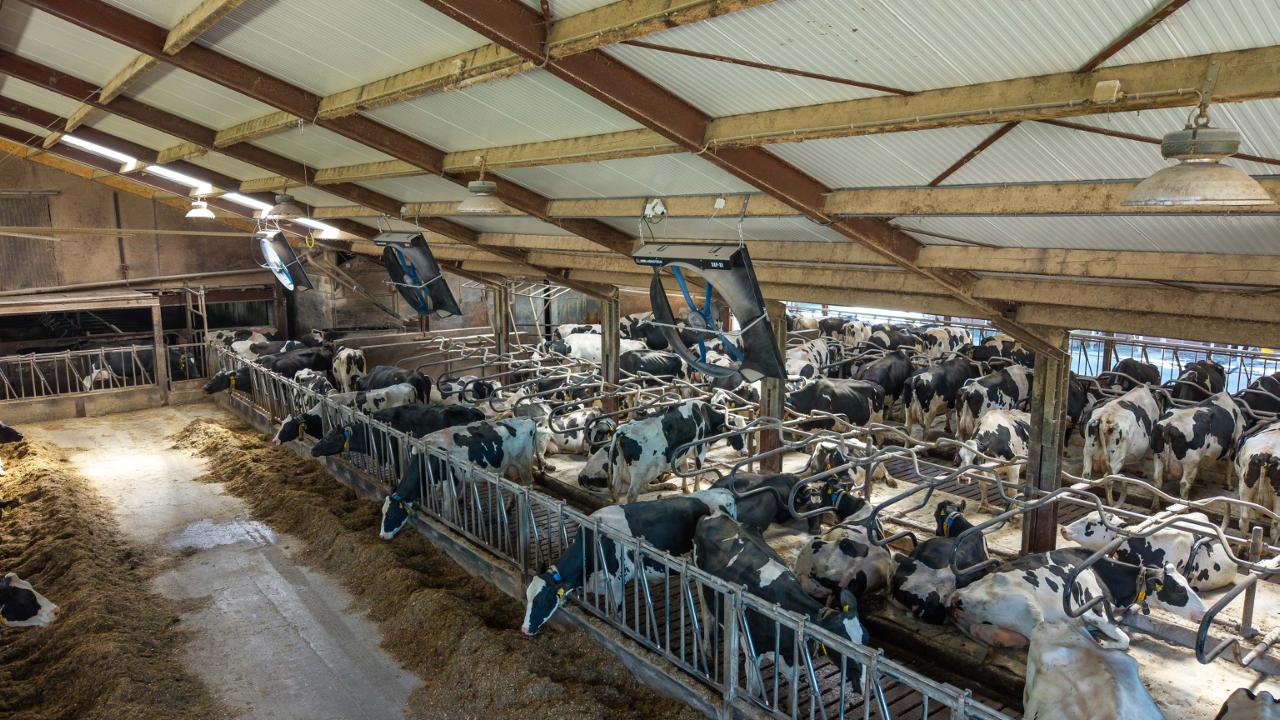
Healthy cattle form the basis for good farm profits.
As a dairy farmer, you want the best for your animals. In addition to giving them the care and attention they need, you provide optimal rations and unlimited access to fresh
water while also looking for the best genetic makeup for your livestock.
In short: everything you do is geared towards keeping your cattle healthy. Because healthy cattle form the basis for good farm profits.
Laws and regulations around animal welfare, phosphate, and ammonia emissions have been putting your business to the test for many years. And recently, a new challenge
has been added to the list: climate change.
With an increase in temperatures and the number of hot days, heat stress has become a very real threat to your livestock.
The dangers of heat stress
Cows are most comfortable at ambient temperatures between -5° and 12°C. Climate change is responsible for increasingly lengthy periods of extremely hot weather.
High-yielding animals, such as dairy cows, suffer more frequently from heat stress. This leads to disruptions in their bodily functions, resulting in a decrease in animal welfare and a deterioration in animal health.
Heat stress can be recognised by:
• Reduced feed intake
• Reduced milk production and content
• Increased bulk tank milk somatic cell count
• Lameness
• Fertility problems
• Increased risk of infection and disease
The right ventilation solution
Heat stress can be mitigated with a state-of-the-art ventilation system in your dairy barn. Numerous factors determine the right ventilation solution for your situation,
including:
• Type of barn
• Air flow in and out of the barn
• Animal group
• Position/aspect
• Possible systems already in use
• Specific climatological circumstances
Latest studies have shown that as the milk yield per cow increases, so does their sensitivity to heat stress; this can start at temperatures as low as 12°C.
The THI-index (air temperature linked to relative humidity) is a good indicator of heat stress. THI values below 68 show no discernible negative effects on dairy cow milk production, health, and reproduction.
Simple tips to reduce the negative impacts of heat stress on dairy cattle:
1. Provide adequate shade.
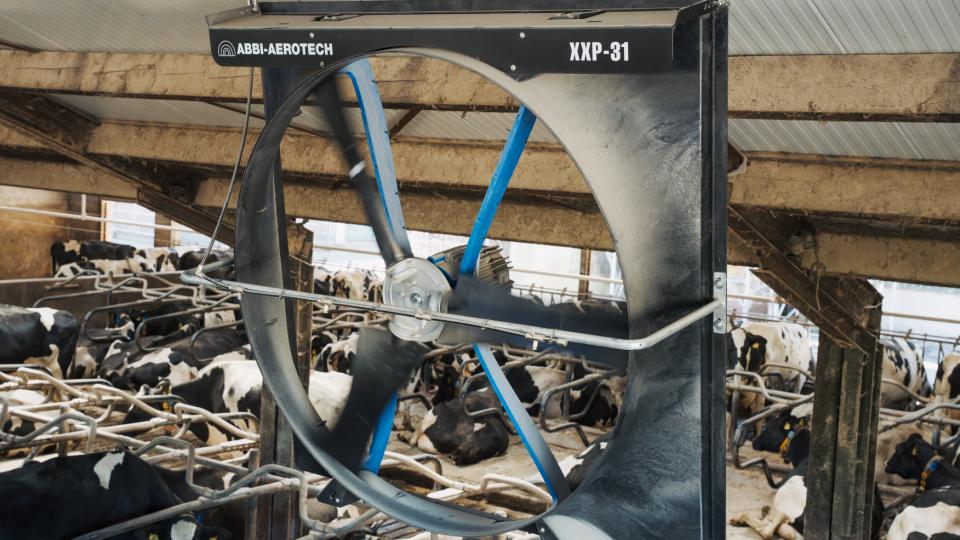
2. Provide cooling with fans.
3. Supply enough fresh and clean water.
4. Modify feed rations to increase energy supply and decrease heat load on the cow.
5. Add sprinklers/soakers and/or misters/foggers when possible.
We, from Abbi-Aerotech bv, can help you determine the right solution for combatting heat
stress to keep your dairy cows and profits healthy. And that involves much more than just placing a fan somewhere.
Artikel er skrevet af:
Abbi-Aerotech B.V.
Et bedre staldklima. Sundere køer. Energieffektiv ventilation.
Abbi-Aerotech B.V. har i årtier udviklet og produceret aerodynamisk udformede, energieffektive ventilatorer til mælkeproduktionen. Vores løsninger hjælper med at reducere varmestress, forbedre luftkvaliteten og fremme dyrevelfærden.
Vi tilbyder ventilationsløsninger til forskellige dyregrupper og staldtyper. Ved at kombinere energieffektive ventilatorer med avanceret motor- og styringsteknologi leverer vi løsninger, der er tilpasset de enkelte malkekvægsbedrifters behov.
Vores team samler ekspertise inden for landbrug, tek
Mød os på Agromek 2026


Ansvar for indhold på sitet
Oplysninger, billeder, produktbeskrivelser, videoer, certificeringer, bæredygtighedsudsagn og øvrigt indhold på virksomhedsprofilerne uploades og vedligeholdes af de enkelte udstillere.
Udstilleren er selv ansvarlig for indholdets korrekthed, dokumentation og lovlighed, herunder overholdelse af gældende regler om markedsføring, bæredygtighedsudsagn og immaterielle rettigheder.
MCH A/S stiller alene platformen til rådighed og verificerer som udgangspunkt ikke indholdet.